
Skip to content
REEN’S

Our story

Tales of Hunza

I grew up watching my grandmother work a frame by the window in Karimabad. REEN’S exists so that the same stitch can be bought at its real price, and so the hands that make it are named.

Chapter 01

The valley and the stitch

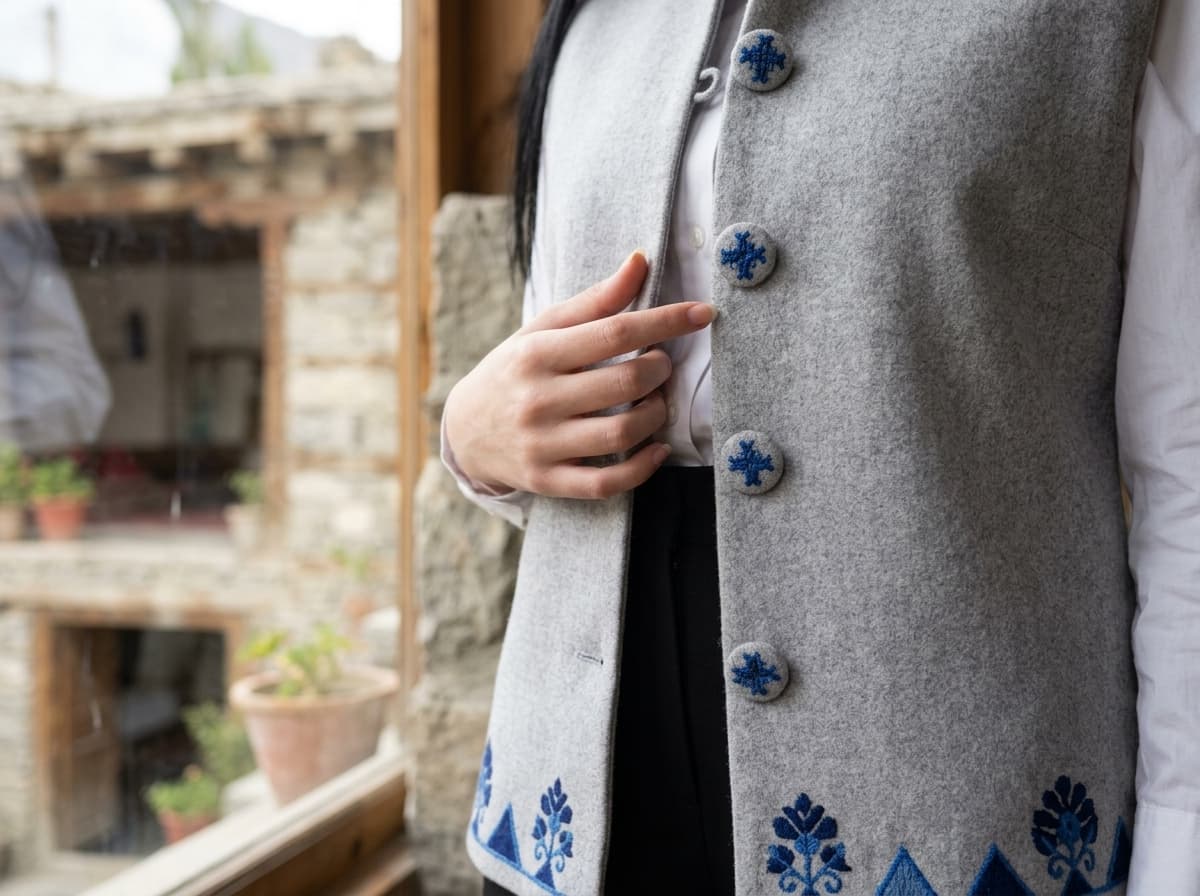
Hunza embroidery was dowry work: a woman’s hours recorded in thread on wool heavy enough for a winter at 2,300 metres. The motifs are not decorative inventions but a vocabulary — Chinar leaf, apricot blossom, the switchback of a mountain path.

Very little of it survived the shift to machine goods. What did survive is held by perhaps forty women across three villages, most of them past fifty.

Chapter 02

Paid by the hour

Piece rates punish care. We cost every garment from a logged number of hours at the frame, pay that rate whether the piece sells or not, and print the hours on the product page so the price can be checked against the work.

Nothing is produced in volume. A design is made in an edition of eight to twelve, then retired.

“A coat should outlive the person who buys it. That is the whole idea.”
Reen, founder

Chapter 04

The four techniques

Chapter 05

The women at the frame

See what their hands made

The collection